SEFIRE · Fireplace guides
Holographic Fireplace Effects: Optics, Heat and Installation
Understand optical fireplace effects and distinguish them from water mist and ethanol combustion before specifying an ambience feature.
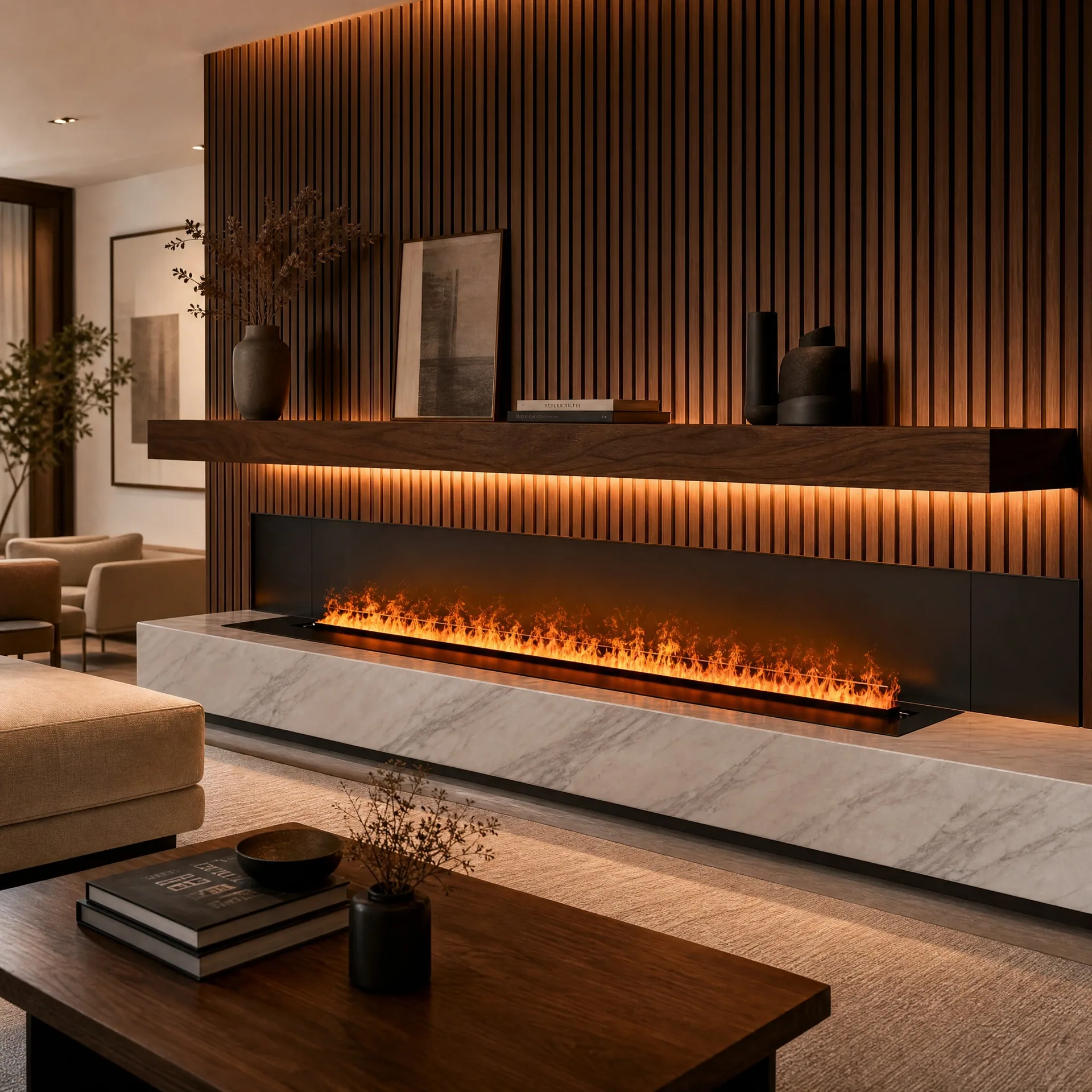
What “holographic” usually describes
In fireplace marketing, the term often describes an optical arrangement that makes a flame image appear among physical decorative media. The exact display, reflective surfaces and viewing arrangement vary by product. It is not the same process as a water vapor plume, and it does not establish that a product creates a physical flame.
Compare the visual systems
A mist fireplace illuminates moving atomized water. An optical fireplace uses a display or lighting arrangement and reflective components. An ethanol fireplace burns liquid fuel to create real flame. These distinctions affect viewing angles, maintenance, services and room heat. Ask to see the exact product operating from the intended seating positions.
Does it provide heat?
A flame image does not itself establish a heating function. Some electric products include a separate heater; others are visual-only. Confirm the actual model, heater rating and electrical requirements. “Zero heat” in a legacy marketing title should not be read as a guarantee that every surface or electronic component remains at room temperature.
Installation questions
- Which viewing angles preserve the effect?
- How does daylight or direct room lighting affect reflections?
- What depth and ventilation does the equipment need?
- How are the optical surfaces cleaned?
- How can displays, fans and power supplies be serviced?
- Is any separate heater included in the ordered configuration?
Request the current specification
The former SE HOLO article described an ambience concept, not a universal specification for all electric products. For a current proposal, ask SEFIRE for the available model, demonstration and approved drawing. Do not assume that an EVFP or another optical model is identical to an older HOLO marketing description.
Choosing an effect for the room
For a hotel lobby, test daylight and guest viewing positions. For a TV wall, check glare and access before fixing the enclosure depth. For a moisture-sensitive area, compare a visual-only electric system with a mist system using the real installation requirements rather than a rendered image.