Fireplace Comparison
Ethanol vs Electric Fireplace: Real Flame, Heat, Cost and Project Fit
Choose an ethanol fireplace when a real flame is central to the design and the project can support its installation and operating requirements. Choose an electric fireplace when you want an electric flame effect, optional model-specific heat and no liquid-fuel handling. The right decision depends on how the room will be used, not just how the flame looks in a photograph.
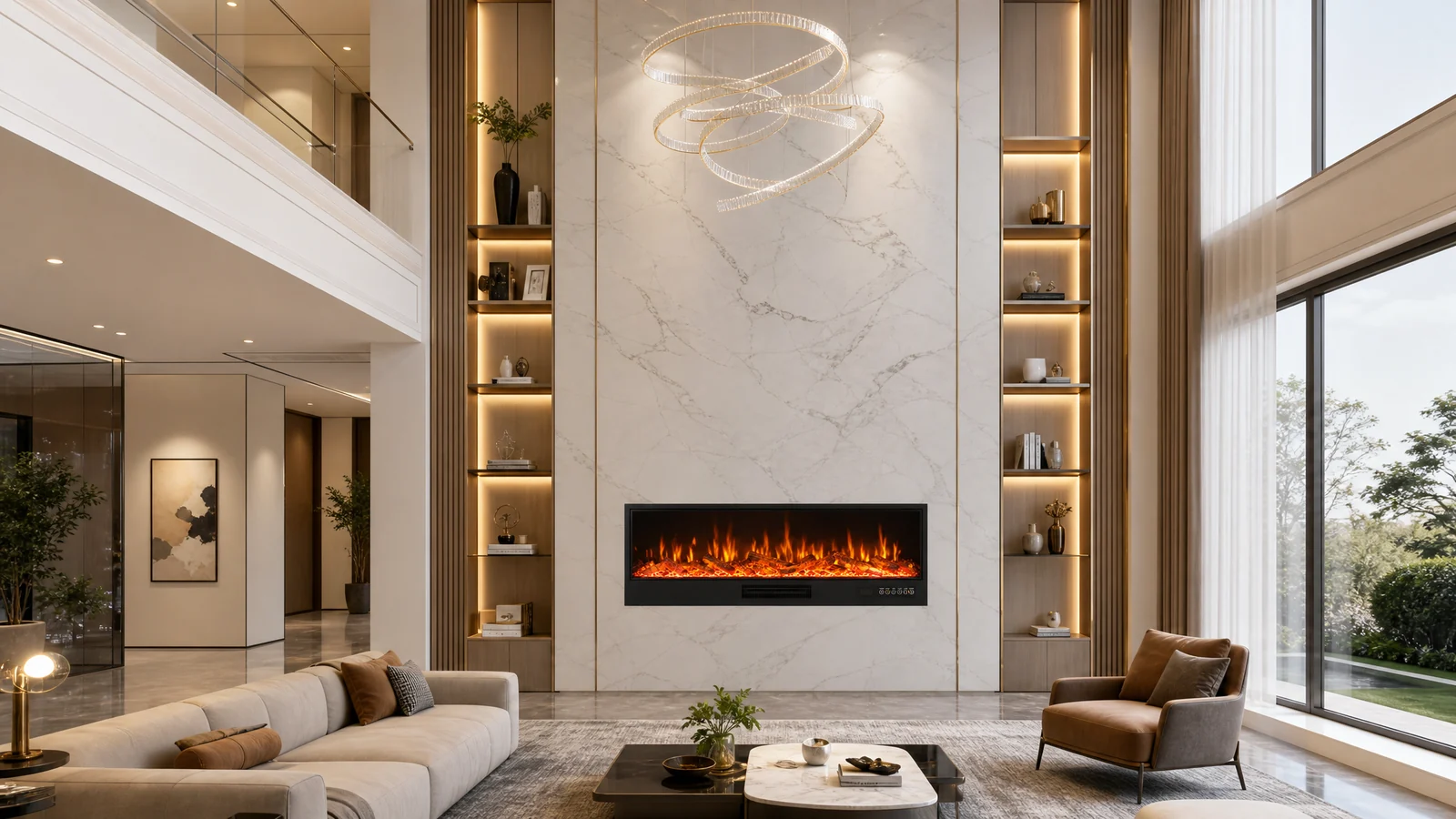
The main difference: combustion versus an electric effect
An ethanol fireplace burns the approved liquid fuel to produce a real flame and heat. A manual burner and an electrically controlled smart burner differ in operation, but both remain combustion appliances. Automation does not turn a real flame into a cold visual effect.
An electric fireplace creates the appearance of flame electrically. The method varies between products; some use lighting and moving optical effects, while other designs use different display technologies. A model may include a separate electric heater. Confirm both the flame system and the heating specification rather than assuming every electric fireplace works the same way.
Water vapor is another category to consider when you want a three-dimensional decorative effect without ethanol combustion. A water vapor fireplace needs electricity and water. A SEV smart ethanol vapor fireplace still uses ethanol and a real flame; the shared word “vapor” does not make these technologies equivalent.
Ethanol vs electric fireplace at a glance
| Decision | Ethanol fireplace | Electric fireplace |
|---|---|---|
| Flame | Real fuel combustion | Electric visual effect; no ethanol combustion |
| Heat | Heat accompanies the real flame | Model-specific heater; check whether the effect can operate independently |
| Operating inputs | Approved ethanol fuel; some smart systems also use electricity | Electricity; verify visual-only and heating-mode consumption separately |
| Project planning | Clearances, room suitability, ventilation and fuel handling | Power supply, heater outlet, clearances and installation access |
| Routine care | Fuel management, burner care and model-specific inspections | Cleaning and care of visual, fan and electrical components |
| Operator role | Training, supervised use and correct refueling procedures | Correct controls and heat-mode use; no liquid refueling |
Do you want heat whenever the flame is visible?
Ethanol combustion produces heat while the fire is burning. Consider whether that is desirable during summer, in a crowded restaurant or in a room already conditioned by HVAC. Turning down an adjustable real flame can change the output, but it does not eliminate combustion or its heat.
For an electric unit, ask whether the visual effect can operate with its heater off. If so, that separation can be useful for year-round ambience. Where heat is needed, match the heater to the room and electrical supply with a qualified installer. Neither a decorative ethanol flame nor a small electric fireplace should be assumed to replace the building's planned heating system.
As a product example, the SEFIRE EVFP page lists two heater settings of 750 W / 1,200 W for EVFP600 and EVFP1200, and 1,200 W / 1,800 W for EVFP1800. These are heating specifications, not measured visual-only consumption or a universal heating-area promise.
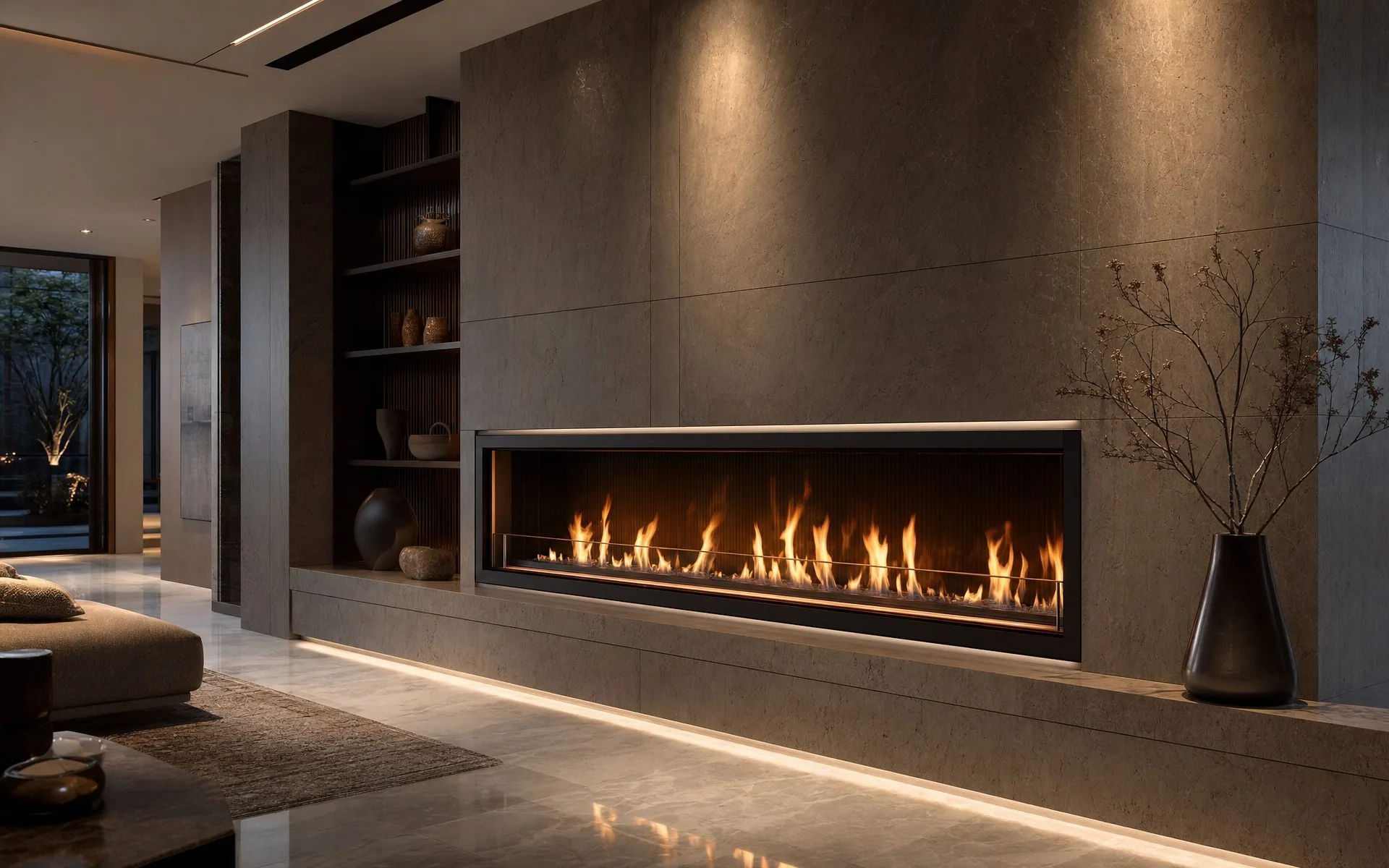
Compare running costs with the same usage schedule
For electric operation, estimate energy cost as watts ÷ 1,000 × hours × electricity price per kWh. The EIA explanation of electricity measurement supports the distinction between power and energy. Use a measured session or the mode-specific rating, particularly when the heater cycles.
For ethanol, estimate fuel cost as liters per hour × hours × delivered fuel price per liter. Include electricity used by the smart system, where applicable. SEFIRE's Regular smart ethanol family lists a broad 0.4–4.3 L/h range across different models and flame settings. That range does not say that one chosen burner uses every value, and it should not be assigned to a manual burner or SEV model.
Illustrative arithmetic, not comparable heating performance: a 1,200 W electrical load running continuously for two hours at an assumed $0.20/kWh costs $0.48. A burner consuming an assumed 0.5 L/h for two hours at an assumed $4/L costs $4 in fuel, plus any electrical input. The examples do not deliver the same heat or flame experience and are not current utility or fuel prices.
Actual bills depend on product settings, the heating duty cycle, energy prices and purchasing arrangements. Add service, consumables and installation to the ownership budget. Read the ethanol fuel-consumption guide before requesting a model-level estimate.
Installation: no chimney does not mean no requirements
A ventless ethanol design still needs its specified room conditions, ventilation, clearances and compatible surrounding materials. Confirm whether the selected appliance and placement are allowed for the project with the responsible installer and local authority. Do not use a decorative room rendering as evidence of an approved enclosure or safe distance.
An electric insert also needs planning: correct voltage and frequency, circuit capacity, permitted mounting arrangement, service access and an unobstructed heater outlet where a heater is fitted. A qualified electrician should confirm the connection. Building a wall first and buying an appliance later can leave either category without sufficient space or access.
For a TV wall, evaluate the specific heat path and the television manufacturer's limits before approving a layout. The absence of liquid fuel does not make an electric heater's warm-air discharge harmless to screens or furniture. A real flame requires its own appliance-specific review. Start with the installation planning checklist and the selected manual.
Operation, fuel handling and noise
Ethanol requires a written operating and refueling procedure, suitable fuel storage and the correct fuel for the appliance. Never add fuel to an operating or hot burner. Follow the manual's shutdown, cooldown and filling procedure; remote control is not a substitute for operator supervision. Health Canada explains flame-jetting risks associated with refilling liquid-fuel products, and CPSC provides liquid-fuel container safety guidance.
Electric units avoid that liquid-fuel routine, but they still require normal electrical and heater care. Fans, visual mechanisms or optional sound effects can be audible. Smart ethanol models may also contain operating components that make sound, so do not promise either category is silent. In a quiet bedroom or lounge, listen to the exact model in the intended mode and ask which sound features can be disabled.
Match the appliance to the people using the space
Apartment or family living room
If convenient controls and a flame effect without liquid refueling are priorities, start with electric options. Confirm property permissions, electrical supply and installation instructions. If real fire is the design priority, evaluate ethanol only after the room, operating routine and appliance requirements have been reviewed.
Hotel lounge or restaurant
A staffed lounge may be able to manage an ethanol operation program. That is a planning scenario, not a claim that any unit is approved for every public venue. Define staff training, fuel storage, shutdown responsibility and opening hours. For unattended guest use, first evaluate products and controls designed for the intended setting and obtain the property's approval.
Decorative wall in a warm climate
If heat is unnecessary, check electric visual-only operation or compare a water vapor alternative. Selecting a real-flame product solely for its appearance can introduce an unwanted heat load and an operating routine the owner did not expect.
Five questions to settle before you order
- Is a real flame essential, or is a visual effect sufficient?
- Is heat wanted every time the flame is visible?
- Who will operate the appliance and carry out routine care?
- What do the model's manual and the approved installation drawing require?
- What are the model-level electricity, fuel and service costs at your usage schedule?
Frequently asked questions
Does an ethanol fireplace need electricity?
A manual burner may not, while a smart system can require electrical power for controls and operating components. Check the exact model. The power requirement does not replace its ethanol fuel requirement.
Which one looks more realistic?
Ethanol has a real flame. Electric visual quality varies by technology and viewing conditions. Compare a working sample from the seating position rather than relying only on edited video or photographs.
Can an electric fireplace run without heat?
Some models separate the visual effect from the heater. Confirm this function and its power consumption for the selected configuration.
Is a smart ethanol fireplace the same as a water vapor fireplace?
No. Ethanol produces a real combustion flame; a water mist system creates a decorative effect from water and light. SEV ethanol vapor is still a real-flame ethanol product.
Sources and specification boundaries
Product comparisons use the SEFIRE smart ethanol range, EVFP model information and the linked fuel and electricity guidance. They do not establish certification, universal clearances or jurisdiction-wide approval. Request current documents for the actual model and use.
Choose the right fireplace for the room
Tell us whether real flame and heat are required, who will operate the appliance, and the room's installation dimensions. We can help compare the relevant product families.
Discuss Your Fireplace Brief