Fireplace Terminology
Hearth vs Fireplace: The Difference, Parts and Renovation Decisions
The hearth is the base of a traditional fireplace; the fireplace is the complete appliance or installed system. The floor area extending in front of the opening is the hearth extension where one is required. A mantel is the shelf or framework around the opening, and the firebox is the chamber containing the fire. Naming the right part helps prevent an incomplete renovation quote.
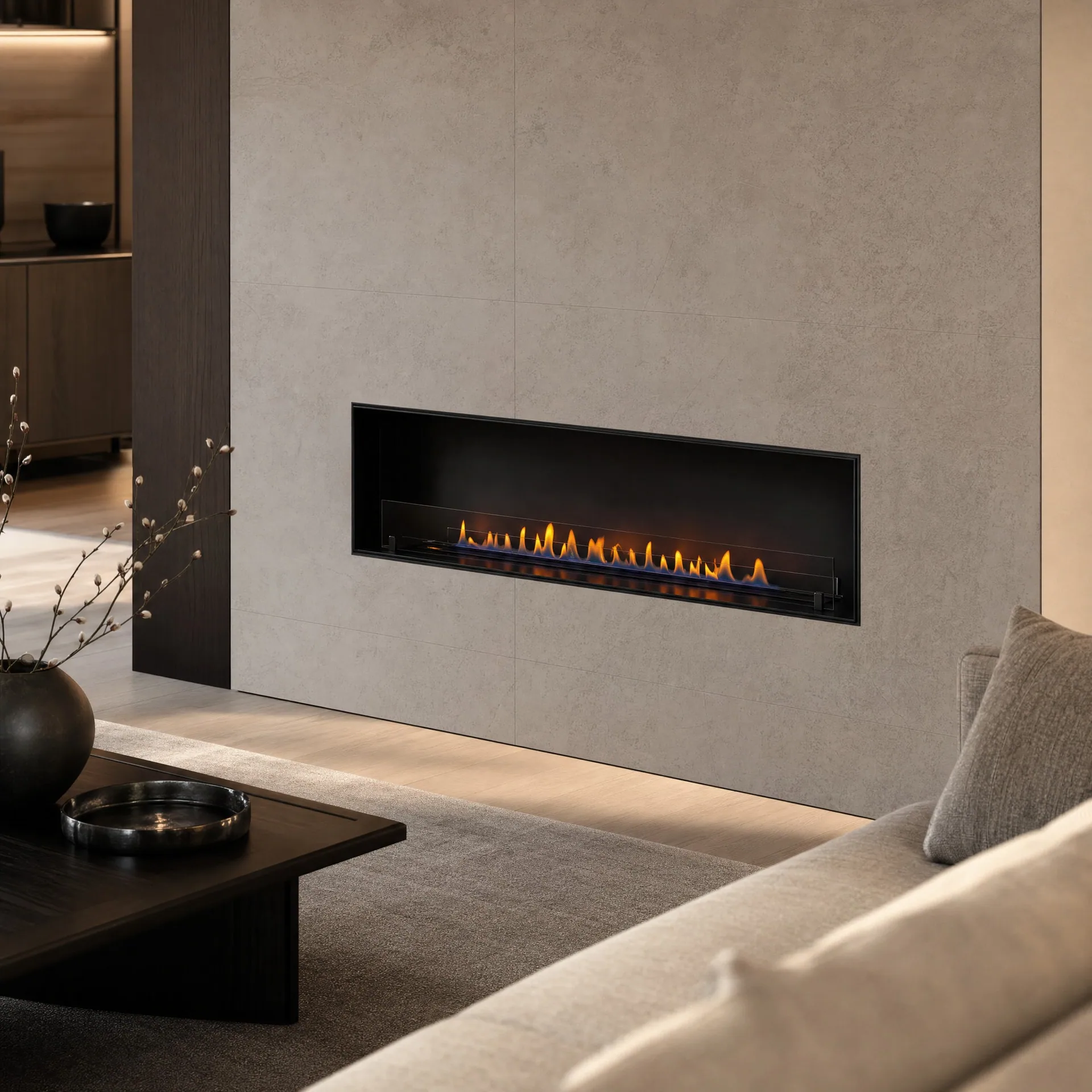
What each fireplace component means
| Component | Location and purpose | Common misunderstanding |
|---|---|---|
| Hearth | The base or floor associated with the fire; an extension may protect the room floor in front | Calling the shelf above the opening a hearth |
| Firebox | The chamber that contains combustion in a burning appliance | Treating it as the whole fireplace |
| Surround / facing | The visible finish around the opening | Assuming the finish proves the hidden wall is protected |
| Mantel | A shelf and sometimes an architectural frame around the opening | Assuming any shelf can serve as an approved heat shield |
| Fireplace | The complete appliance or system, with the components it requires | Assuming every modern fireplace has a chimney |
The word “hearth” is also used broadly for a fireside area or the fireplace industry. On a construction drawing, define whether it means the firebox floor, an external hearth extension or a decorative platform. A single label is not enough to establish thickness, projection or acceptable material.
Why a hearth and hearth extension matter
For a traditional wood-burning fireplace, the area under and in front of the opening is part of fire protection and the installed assembly. It must be considered with the size of the opening, appliance type, floor structure and applicable requirements. Dimensions taken from a photograph, another house or an unrelated online guide do not establish the right detail for your fireplace.
A raised hearth changes the visible level and can introduce an edge into the room. A flush hearth changes how the protective area meets the surrounding floor. Neither style removes the need to assess the complete build-up. The visible stone or tile, substrate, supporting structure, joints and nearby combustibles must be considered together.
Choose materials for the specified construction
Brick, stone, porcelain, concrete and metal appear in fireplace designs, but their names alone do not qualify an assembly for a particular temperature or appliance. Check the material manufacturer’s intended use and the fireplace instructions. Adhesives, sealants, backing boards, trims and concealed framing can be limiting components even where the visible surface is noncombustible.
Do not cover damaged firebrick or refractory panels with a decorative finish and call the firebox repaired. Do not place a new insert on a hearth merely because it looks level. The hearth and support must suit the installed product and the planned services. The firebox guide explains the chamber and housing distinction in more detail.
Renovating a hearth is different from replacing a fireplace
| Work package | What may be included | What it does not automatically include |
|---|---|---|
| Hearth finish renovation | Removal, substrate preparation, finish and edge detail | Firebox repair, chimney work or new appliance approval |
| Firebox or appliance repair | Specified replacement components and servicing | A new mantel, structural changes or permission to change fuel |
| Complete fireplace replacement | Appliance, enclosure and required services | Every finish, inspection or building alteration unless itemized |
| New decorative insert | Compatible insert, opening and access coordination | Approval to remove an existing hearth or reuse an old chimney |
Ask the contractor to separate product cost, removal, support, utilities, ventilation where required, finishing, commissioning and disposal. An attractive fixed price can omit one of these interfaces. Compare the scope rather than assuming there is a universal hearth-renovation price or that a complete replacement costs a fixed multiple.
Do ethanol, electric and water vapor fireplaces need a hearth?
There is no single answer across all models. A modern appliance may have a different enclosure and floor-protection arrangement from a masonry wood fireplace. Use the selected instructions and local requirements; do not transfer traditional hearth dimensions automatically or assume that no chimney means no protective construction.
An ethanol appliance has a real flame and heat. An electric fireplace may have a warm-air outlet. A water vapor fireplace uses electricity and water and needs its mist and service space. None can be approved for an old opening simply from the existing hearth’s appearance.
Maintenance: distinguish the surface from the system
Follow the material supplier’s cleaning instructions for the hearth finish and avoid cleaning a hot appliance. Cracks, loose finishes, movement or heat damage warrant assessment of the underlying assembly. A traditional fireplace may also require specialist chamber and chimney inspection; surface cleaning does not perform that inspection. For a modern insert, add its specified burner, electrical or water-system care.
A clear renovation brief
- Photograph the complete fireplace and record the existing appliance model if identifiable.
- Mark the hearth, extension, opening, surround and mantel separately on a dimensioned sketch.
- State whether the project changes appearance, fuel, appliance, heat output or room layout.
- Ask the installer to identify the applicable instructions, supports, services and inspection responsibilities.
Frequently asked questions
Is a hearth the same as a mantel?
No. The hearth is at the base; the mantel is a shelf or architectural framework around the opening.
Is the hearth inside or outside the fireplace?
The term can refer to the base in the fireplace. Use “hearth extension” to identify the protective area outside the opening.
Can I remove an old hearth for a water vapor insert?
Do not assume so. The old system, structural role, new appliance and proposed floor detail need assessment.
Can several old fireplace parts be reused?
Only after compatibility and condition are checked for the chosen replacement. Decorative similarity is not evidence of suitability.
Discuss your project
Share the existing opening, hearth and wall section, plus the flame technology you want to use.
Plan a Fireplace Renovation