Running Cost Guide
Water Vapor Fireplace Running Cost: Electricity, Water and Maintenance
A water vapor fireplace has three operating costs to plan for: electricity, water and maintenance. The most useful estimate starts with the exact model and your expected opening hours. A universal “pennies per day” promise can hide a large difference between a short residential insert and a long display running throughout a hotel lobby shift.
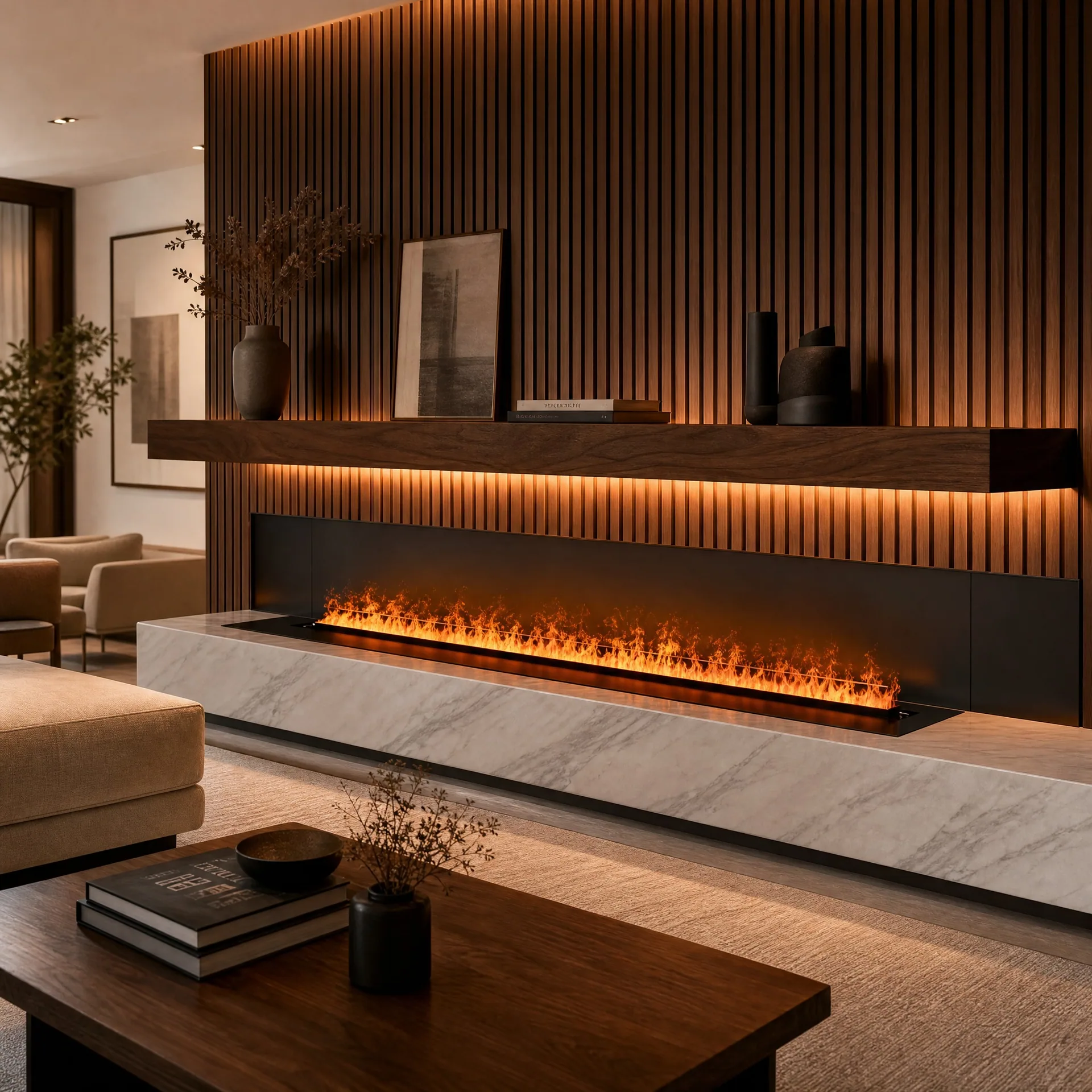
How much does a water vapor fireplace cost to run?
For an illustrative electricity rate of $0.20 per kWh, a unit drawing 500 W costs $0.10 per operating hour, or $0.40 for four hours. Running it four hours every day for 30 days would cost $12 in electricity. This is an arithmetic example, not a current U.S. average tariff, an energy test or a price quotation.
Add the cost of the water specified by the manual, cleaning materials and any service or replacement parts. A water vapor fireplace creates a decorative flame effect from illuminated mist. Do not treat its electrical input as a promised room-heating output, or compare it with a heater as though both provide the same service.
Calculate electricity cost from watts and hours
Electricity cost = watts ÷ 1,000 × operating hours × price per kWh.
For a monthly estimate, multiply the daily result by the number of operating days. Use the energy rate on your own electricity bill.
The U.S. Energy Information Administration explains the difference between watts and kilowatt-hours: watts describe power, while kWh describes energy used over time. A 500 W appliance running continuously for four hours uses 2 kWh. A 500 W rating does not mean it consumes 500 kWh.
A catalog input rating is useful for an initial budget, but operating settings and the delivered configuration can change actual draw. Ask whether the stated figure is a maximum rating or measured consumption in a defined mode. For a more accurate forecast, record energy use during a representative operating session using a suitable meter, with an electrician's help where the installation is hardwired.
SEFIRE Primary examples: four hours a day
The table uses published Primary VSFB model data as budget inputs. The same assumed $0.20/kWh rate and 30 operating days apply to every row. These are calculated estimates, not measured bills. Water figures are consumption estimates before cleaning, draining or other losses.
| Primary model | Catalog power | Electricity/day | Electricity/month | Water/month |
|---|---|---|---|---|
| VSFB750 | 200 W | $0.16 | $4.80 | 24 L at 0.2 L/h |
| VSFB1000 | 305 W | $0.24 | $7.32 | 36 L at 0.3 L/h |
| VSFB1500 | 500 W | $0.40 | $12.00 | 60 L at 0.5 L/h |
| VSFB2000 | 760 W | $0.61 | $18.24 | 96 L at 0.8 L/h |
Daily figures are rounded to the nearest cent; monthly figures use the unrounded calculation. The estimates exclude taxes, fixed utility charges, commercial demand charges and any separate heater. Do not transfer these figures to Deluxe, outdoor round or another manufacturer's models without their own data.
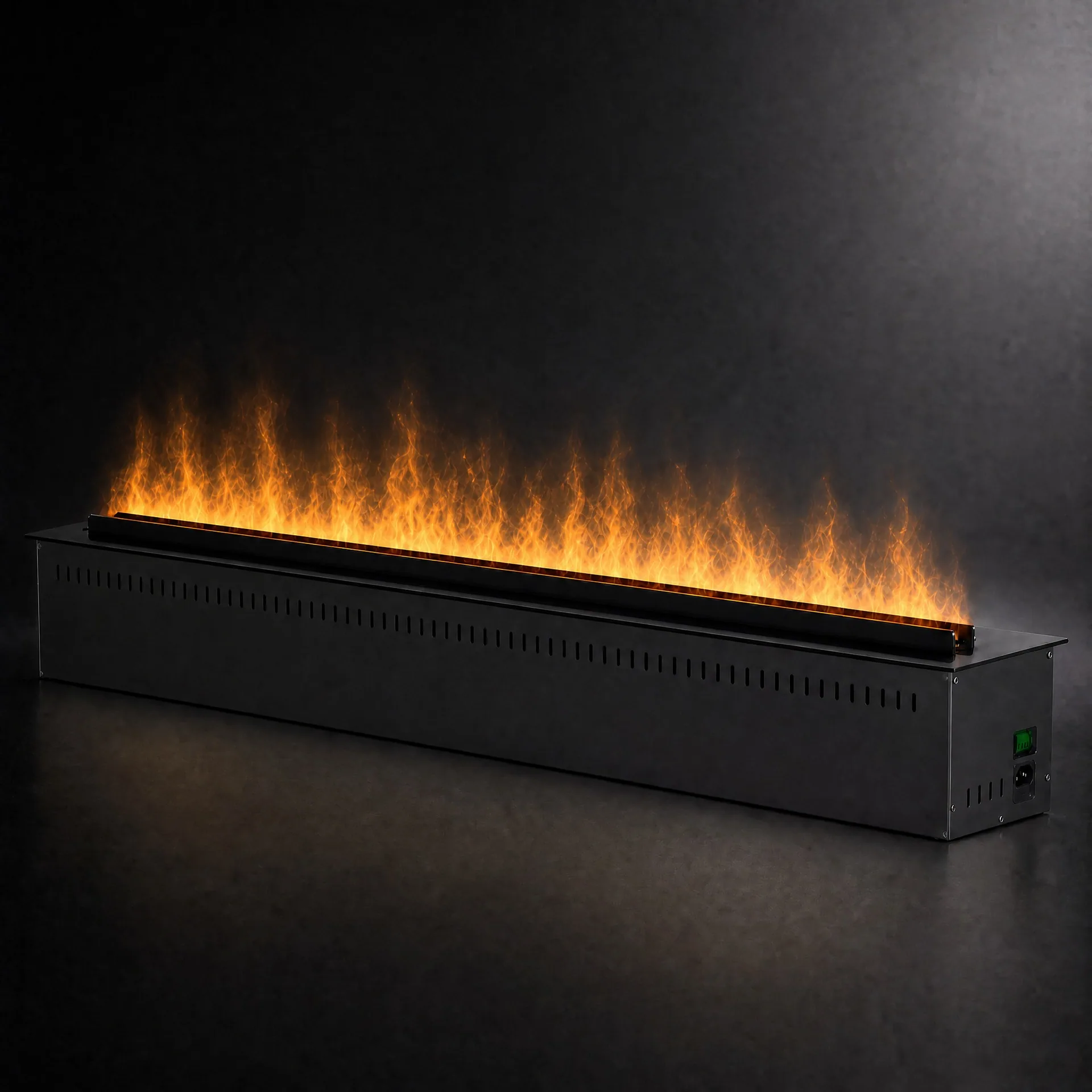
Budget for water consumption and water quality
At 0.5 L/h, four operating hours consume approximately 2 L. Over 30 days that becomes 60 L. Multiply the expected volume by the actual cost of the approved water supply. A property buying bottled water can have a different budget from one using a manufacturer-approved treated supply.
Use the water type specified for the model. Neither “all tap water is fine” nor “all vapor fireplaces need the same water” is a reliable rule. Water chemistry and mineral deposits can affect maintenance, so confirm the specification and read the water-quality guide before choosing a supply. Automatic filling changes the handling routine; it does not make water consumption disappear.
Include service access and maintenance in the comparison
Electricity is only one part of ownership cost. Ask for the cleaning procedure, suitable consumables, access requirements and a priced spare-parts list. The cost of reaching an insert behind finished stone can exceed the small difference between two electricity estimates. Coordinate a service opening before approving the wall or cabinet drawing.
Do not invent a universal annual replacement interval for atomizers, filters or pumps. The right plan depends on the product, water quality, use and observed condition. For an existing installation, record service time and purchased parts for several months. For a new project, agree an allowance with the supplier and the operator instead of presenting it as a guaranteed fee. The cleaning guide explains the questions to take into the operating plan.
A longer opening schedule changes the result
Consider the same 500 W budget input in a hotel display operating 12 hours daily. At the illustrative rate, electricity becomes $1.20/day and $36 over 30 days. At an assumed 0.5 L/h, the mist system consumes approximately 6 L/day, before cleaning and draining. These figures are three times the four-hour example because the operating schedule is three times longer.
They do not establish that one tank lasts a full shift or that the unit is approved for that duty cycle. Confirm permitted operating hours, refill arrangements, electrical supply and service staffing for the selected model. Compare Primary and Deluxe when manual filling versus automatic water handling affects the property workflow.
Reduce unnecessary cost without compromising operation
- Match the visible flame length to the room instead of ordering a larger insert solely for impact.
- Use the approved timer and shutdown sequence when the space is unoccupied.
- Keep airflow and service access consistent with the manual; do not obstruct them to hide the appliance.
- Follow the approved cleaning and water-quality instructions.
- Measure a sample unit at the settings you intend to use, rather than buying on a generic low-energy claim.
Questions to ask before ordering
Request the model number, power rating, operating-mode explanation, water consumption, approved water type, filling method, maintenance procedure, spare-parts prices and drawing showing service access. Give the supplier your daily operating hours and local tariff. A good comparison puts each offer on that same schedule and separates purchase, installation and operating expenses.
Frequently asked questions
Does a water vapor fireplace use electricity even without a heater?
Yes. The mist and lighting system needs electricity. Check its own input rating; the absence of a room heater does not mean zero power consumption.
Is it cheaper than an electric fireplace?
Compare the modes and purpose first. A decorative mist effect and an electric heater are different services. Use actual power, operating hours and local tariffs; include water and service costs for the mist system.
Can I use this table for a Deluxe model?
No. Use the selected Deluxe model's own power and water data. Primary estimates are not a family-wide promise for every SEFIRE product.
Does automatic filling reduce water use?
Automatic filling can reduce manual handling, but it does not remove the water consumed in producing mist. Consumption remains dependent on the model and operating conditions.
Sources and calculation boundaries
Electricity units: EIA, Measuring electricity. Product inputs: SEFIRE Primary model table. The tariff is a hypothetical worked-example input, not a published market average. A signed quotation, delivered nameplate and current manual take precedence over the website summary.
Build a budget for your actual project
Send the required flame length, daily operating hours, water arrangement and local electricity tariff. We can help identify the product data you need for your calculation.
Discuss a Water Vapor Project