SEFIRE · Fireplace guides
How to Humidify a Room Without a Humidifier: Limits and Alternatives
Measure humidity before adding moisture. Everyday evaporation has limited control, and a decorative water vapor fireplace is not a regulated room humidifier.
Measure before changing the room
A room that feels uncomfortable is not necessarily too dry. Use a hygrometer and consider temperature, ventilation and condensation. EPA guidance describes a typical indoor relative-humidity range of 30–50%; the appropriate level also depends on the building and conditions. Persistent dampness or condensation calls for investigation rather than more moisture.
What can work without a dedicated humidifier?
Ordinary evaporation from a small container of water can add some moisture, but the effect depends on water surface area, temperature, airflow and room size. It is not an accurately controlled solution. Keep containers stable, clean and away from electrical equipment, children and finishes vulnerable to spills. Do not claim that a bowl of water will maintain a particular humidity level.
Plants and normal household activities can influence moisture, but they are not a predictable humidity-control system. Do not deliberately create excess steam, leave a cooking appliance running or defeat bathroom ventilation as a room-humidifying method.
Can a water vapor fireplace help?
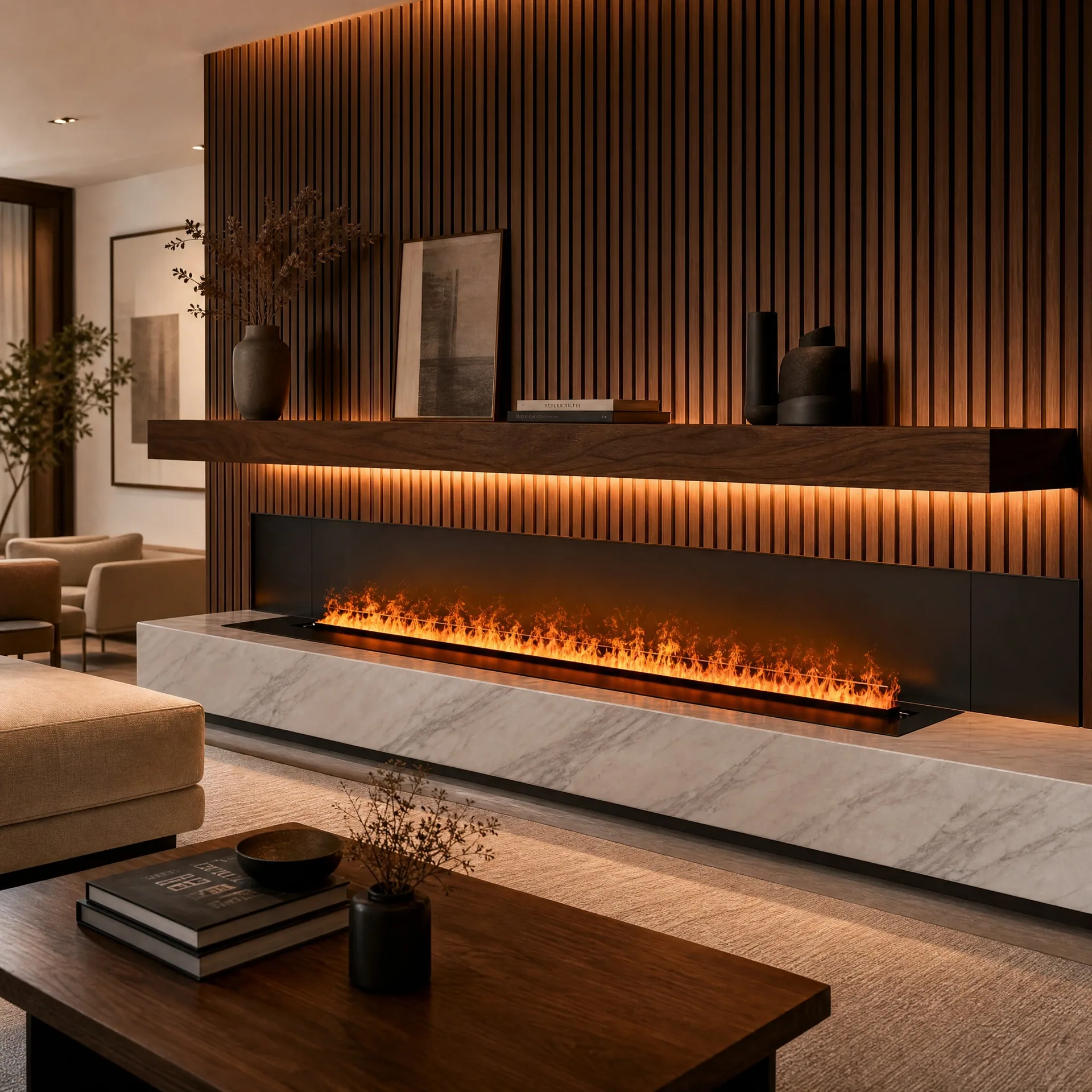
A water vapor fireplace introduces mist while creating a decorative flame effect. That may affect room humidity, but output and room conditions vary. Unless a specific product has a specified humidity-control function, it should not be sold as a substitute for a room humidifier or as a treatment for dryness-related symptoms. Choose it for its stated decorative purpose and monitor moisture conditions.
When controlled humidification is needed
If measurements show a continuing need, consider a correctly specified humidifier or HVAC solution with an appropriate maintenance plan. Follow its water and cleaning instructions. Do not add fragrance or disinfectant to an appliance unless its instructions permit it. A hygrometer remains useful for checking the result rather than estimating by how much mist is visible.
For a fireplace project
Record room size, ventilation, expected operating hours and any moisture-sensitive surfaces. Keep the plume clear and stop to investigate persistent condensation. Humidity and fireplace atmosphere are separate design objectives; achieving one does not automatically control the other.