SEFIRE · Fireplace guides
How Hot Are Ethanol Fires? Flame Temperature, Heat Output and Surfaces
Separate flame temperature from useful room heat, hot surfaces and required clearances when comparing bioethanol fireplaces.
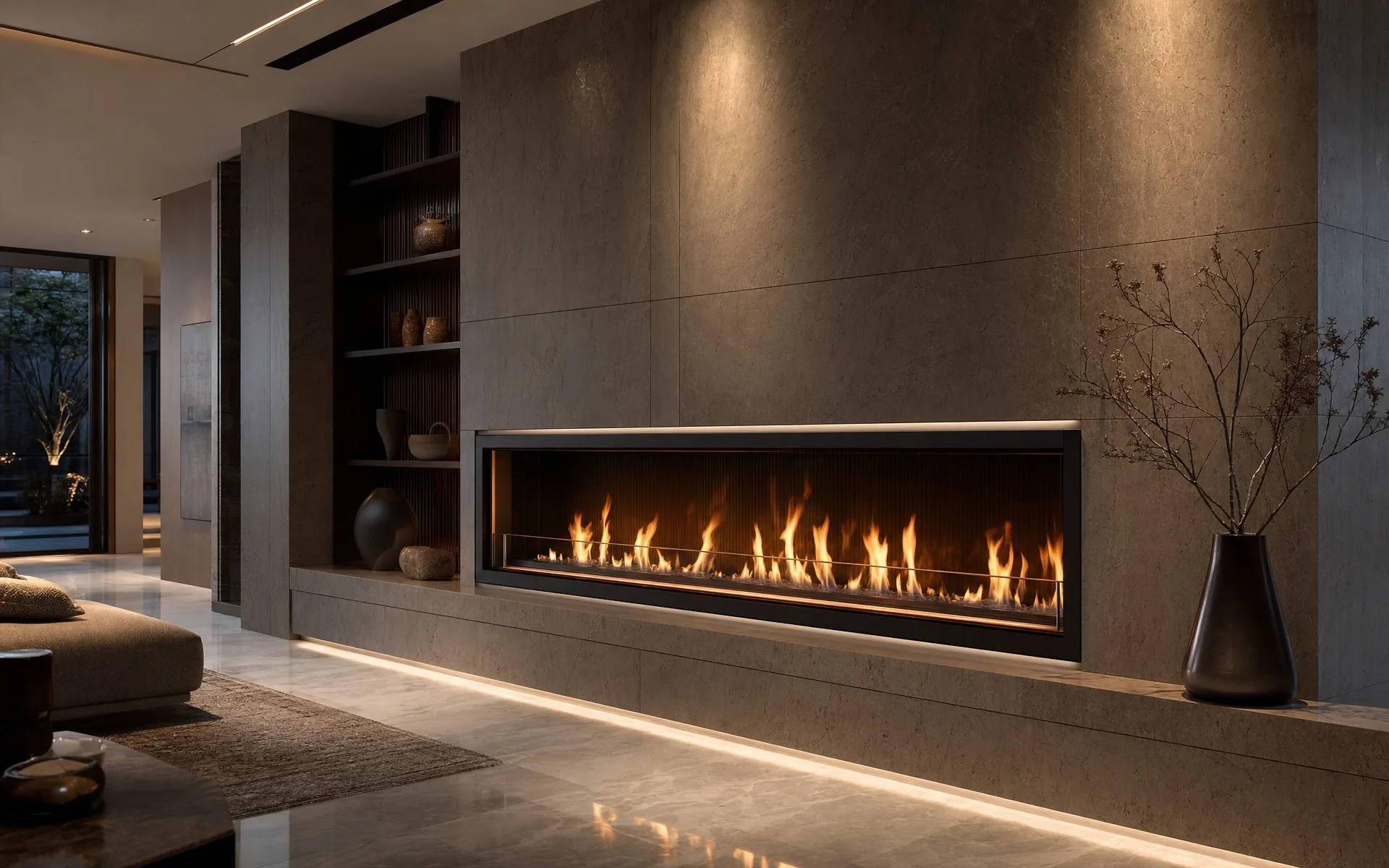
There is no single temperature for an ethanol fireplace
An ethanol flame is hot enough to burn skin and ignite nearby combustible material. Its temperature varies across the flame and with the burner, fuel and operating conditions. A temperature quoted for an alcohol flame in a laboratory is not a measurement of a particular fireplace, and it does not tell you the temperature of a wall, shelf or glass panel.
Four different measurements
| Measurement | What it tells you |
|---|---|
| Flame temperature | A local combustion temperature; not a room-heating rating |
| Heat output, kW or BTU/h | The appliance's rate of heat release at a specified condition |
| Surface temperature | How hot a particular component becomes during a defined test |
| Clearance | The model-specific separation needed from a particular material or obstruction |
Compare models using heat output
SEFIRE's current RCFB Regular catalog spans 2.5–26 kW across different models and settings. The Slim catalog lists 4–8 kW by model, while SEV lists 2–11 kW. These are ranges across product families, not a promise that every model can operate anywhere within the range. Select the actual model before discussing room suitability or running cost.
For unit conversion, 1 kW is approximately 3,412 BTU/h. Thus a stated 4 kW output is about 13,650 BTU/h. This is a conversion example, not an independently tested output for an unspecified product. Electrical input power is also different from combustion heat output: an electrically controlled ethanol burner can consume a small electrical load while releasing substantially more heat from its fuel.
Do not turn a flame temperature into a clearance rule
Clearances depend on geometry, flame height, materials, heat accumulation and the complete enclosure. Follow the delivered appliance instructions and approved project drawings. A stone surface over timber does not automatically create a noncombustible assembly. A TV, concealed cable, adhesive or cabinet can impose additional restrictions.
Fuel, room air and operation still matter
Ethanol combustion consumes oxygen and introduces combustion products into the room when unvented. Do not describe it as emission-free. Match the fuel and ventilation arrangement to the appliance instructions. Let a manual appliance cool fully before refueling; a flame can be difficult to see. Automatic fuel handling is model-specific and must not be replaced by a generic pouring procedure.
Is ethanol suitable as the main heater?
Do not size a primary heating system from a decorative fireplace's maximum output alone. Consider local requirements, permitted operating duration, ventilation, room use and control capability. For atmosphere without combustion heat, compare a water vapor or appropriate electric visual system instead.